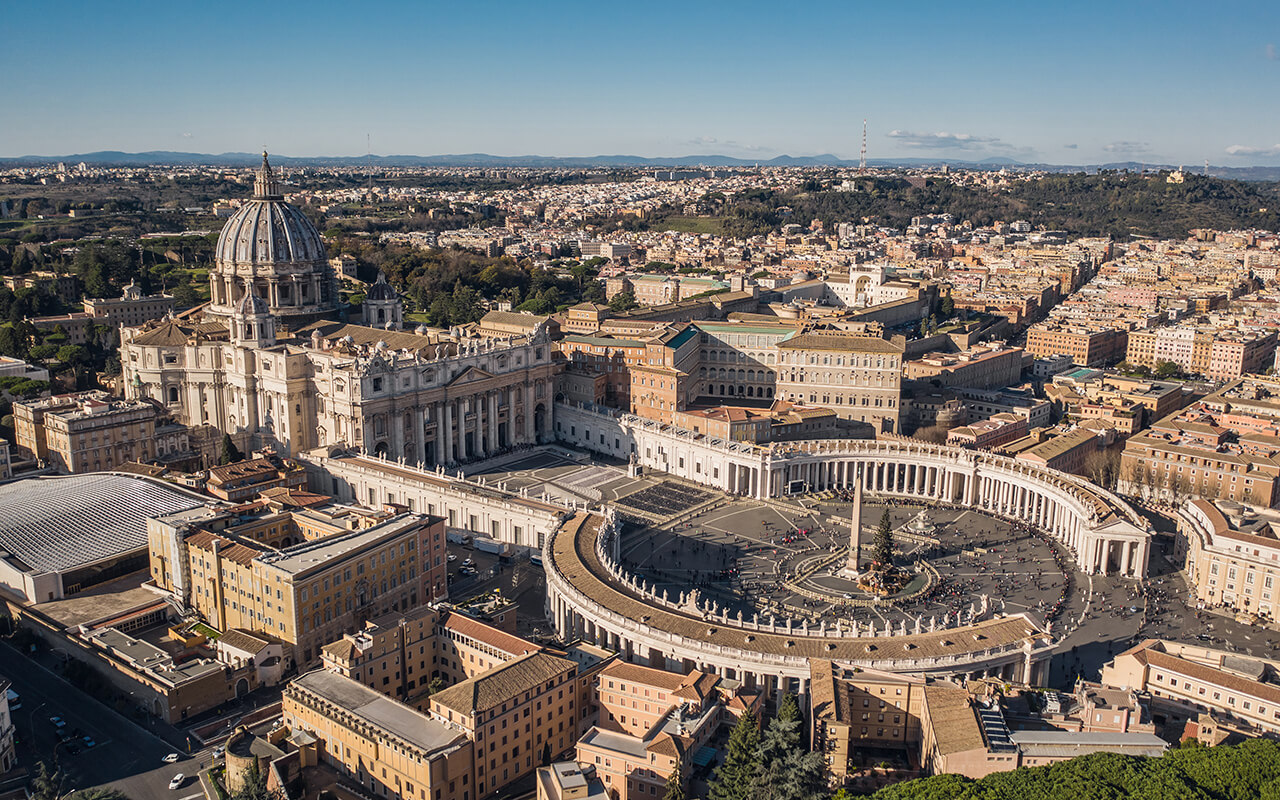
St. Peter's Basilica from the air — Rome
08
September 2, 2026  ·  Day 8 Rome  ·  The Eternal City

There Are Cities
That Shape Civilizations.

Rome is not simply Italy's capital. It is a city layered with more than 2,700 years of continuous narrative — and today, unhurried, it is entirely yours.

Scroll
ColosseumAD 80
Roman Forum7th C. BC
St. Peter'sCompleted 1626
PantheonAD 126
Piazza Navona1st C. AD
Trevi Fountain1762
Spanish Steps1725

How the Day
Unfolds

  • 08:30
    Breakfast at Seven OaksThe familiar morning calm — coffee and conversation before departure toward something monumental.
  • 09:15
    DepartureThe landscape thickens with history as you approach the capital — two hours through the Italian countryside toward Rome.
  • 11:15
    Arrival in RomeEntering the city that has never quite stopped being the centre of something.
  • 11:30
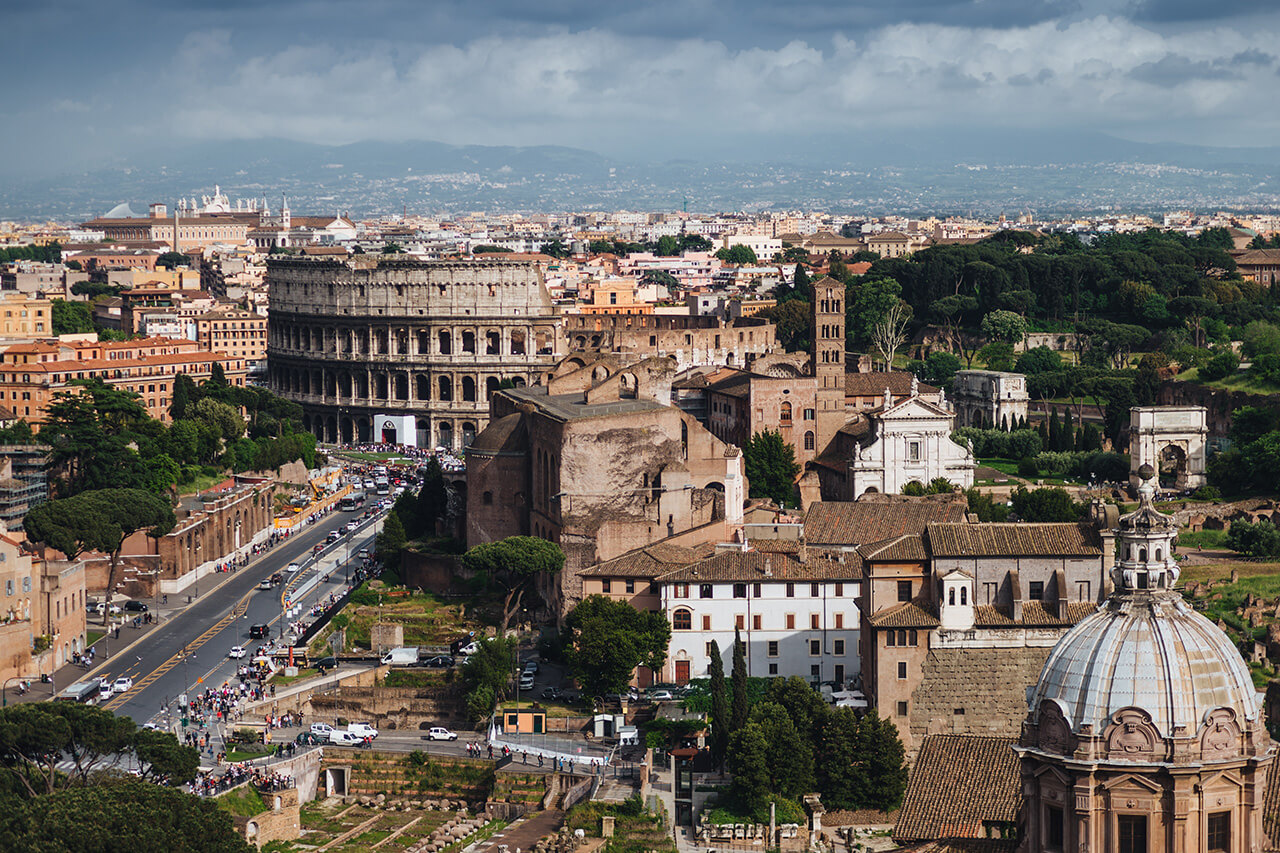
    The ColosseumInaugurated AD 80. Built for 50,000–70,000 spectators. A monument to Roman engineering and the complexity of a society that understood power as performance.
  • ~12:15
    The Roman ForumThe civic heart of the Empire — governance, commerce, and public life in stone and open sky.
  • 13:00
    LunchIn Rome — time to sit, eat well, and let the morning settle before the afternoon's walking route begins.
  • 14:00
    St. Peter's Square & BasilicaBernini's colonnades. Michelangelo's dome. The tomb of the Apostle Peter. Renaissance and Baroque genius converging in one space.
  • ~14:45
    PantheonBuilt AD 126. Its oculus still admits light and rain exactly as it did nearly two millennia ago — one of the most astonishing achievements of ancient architecture.
  • ~15:15
    Piazza Navona · Trevi Fountain · Spanish StepsThree of Rome's great public spaces — each with its own character, century, and story.
  • 16:30
    Panoramic Pass — Piazza VeneziaA reminder that Rome is also modern Italy's capital — still negotiating identity between antiquity and contemporary life.
  • 17:00
    Departure for ReturnThe capital recedes. The road climbs back toward the quiet of the hills.
  • 19:30
    Arrival & Dinner at Seven OaksThe contrast feels deliberate — grandeur giving way to hillside calm. Dinner refined yet understated, allowing the quality of ingredients to speak.

Not Merely
Seeing Rome

There are cities you visit, and there are cities that shape civilizations. Rome belongs to the latter — and the difference is felt immediately upon arrival. This is not a city that presents its history at a manageable distance. It lives in it, around it, atop it and beneath it simultaneously.

Day Eight is structured to move through Rome's layers rather than race across its surface: imperial engineering at the Colosseum, spiritual architecture at St. Peter's, the seamless continuity of the Pantheon, the theatrical pleasure of the great public piazzas. Each stop is unhurried. Each landmark is given time to register at the scale it deserves.

By evening, returning to Seven Oaks, the contrast feels like the point. Rome asks something of you — attention, energy, presence. Molise gives it back. The dinner that night has a particular quality of restoration.

11:30 — The Colosseum, inaugurated AD 80

Not Spectacle.
Scale.

Built to hold an estimated 50,000 to 70,000 spectators, the Colosseum was engineered with remarkable efficiency — vaulted corridors, tiered seating arranged by social rank, and a retractable awning system known as the velarium that shielded the crowd from the Roman sun. Standing before it, one feels not spectacle but scale: the audacity of Roman engineering and the complexity of a society that understood power as performance.

The surrounding archaeological area — where the Roman Forum once functioned as the civic heart of the Empire — grounds the monument in its wider context of governance, commerce, and public life. Here, emperors were deified, laws were proclaimed, and the daily business of running the ancient world unfolded in the open air between temples and triumphal arches that still stand, in fragments, under the Roman sky.

AD 80Inauguration
70,000Capacity
2,700+Years of Rome
VelariumRetractable Awning System
Rome — panoramic view of the ancient city

"Rome is not simply Italy's political centre — it is a city layered with more than 2,700 years of continuous narrative."

At St. Peter's Square, Gian Lorenzo Bernini's colonnades curve outward in what he described as "the maternal arms of the Church."

Inside St. Peter's Basilica — built over the tomb of the Apostle Peter and completed in 1626 — Renaissance and Baroque genius converge. Michelangelo's dome rises above marble and light, completing a building that took over a century to realize and draws on the work of Bramante, Raphael, and Maderno alongside Michelangelo himself. To stand beneath it is to understand what it meant to commission a building not for a lifetime, but for centuries.
St. Peter's Basilica aerial — Vatican Rome
St. Peter's Basilica — Vatican
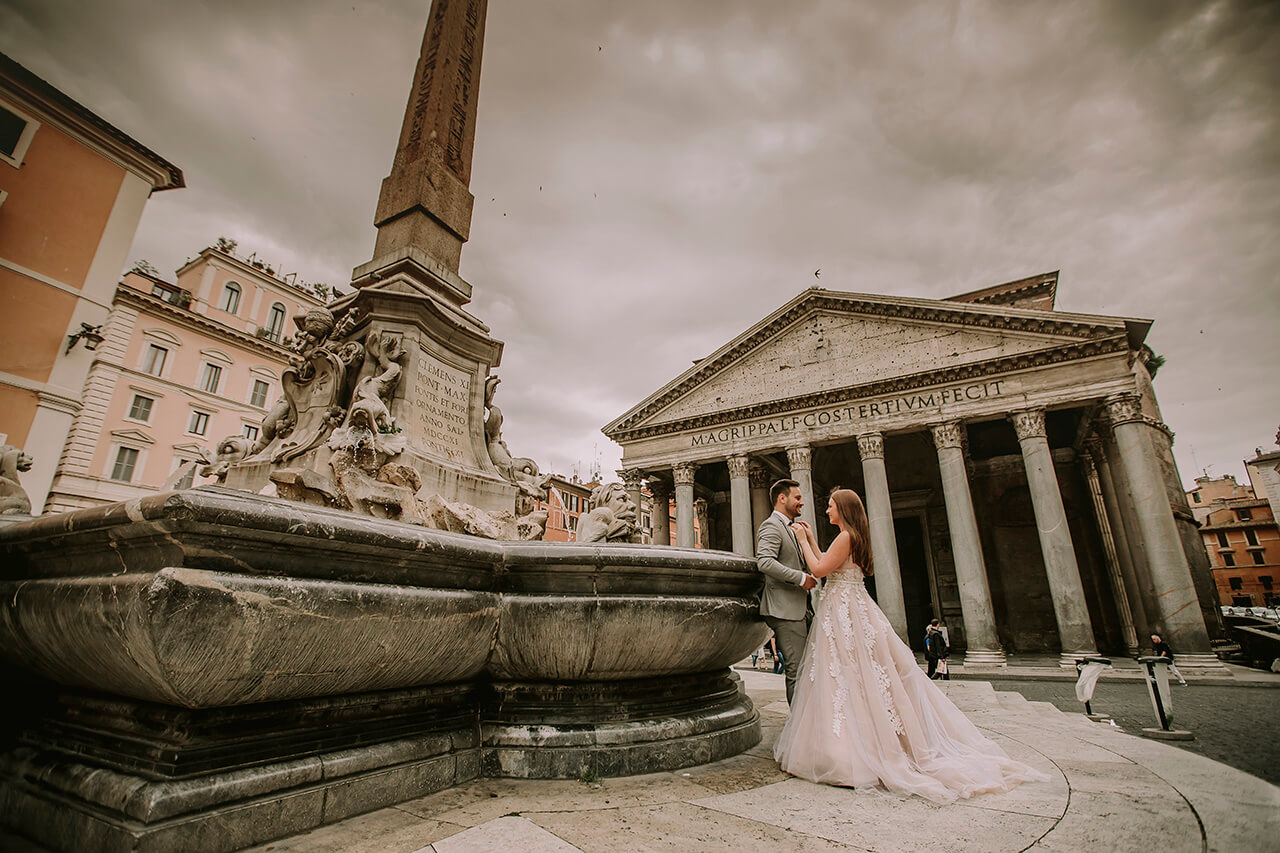
The Pantheon — Rome
The Pantheon — AD 126

Layered Rome

After the Colosseum's imperial weight, the afternoon becomes intimate — moving through Rome's great public spaces at a pace that allows each one to register fully.

Originally 27 BC · Rebuilt AD 126
The Pantheon

Originally commissioned by Marcus Agrippa and rebuilt under Emperor Hadrian, the Pantheon remains one of the most astonishing achievements of ancient architecture. Its oculus — open to the sky — still admits light and rain exactly as it did nearly two millennia ago. The building has been in continuous use since its construction, which is why it survives so completely. No other ancient structure quite delivers the same quality of intact presence.

Built atop the Stadium of Domitian, 1st C. AD
Piazza Navona

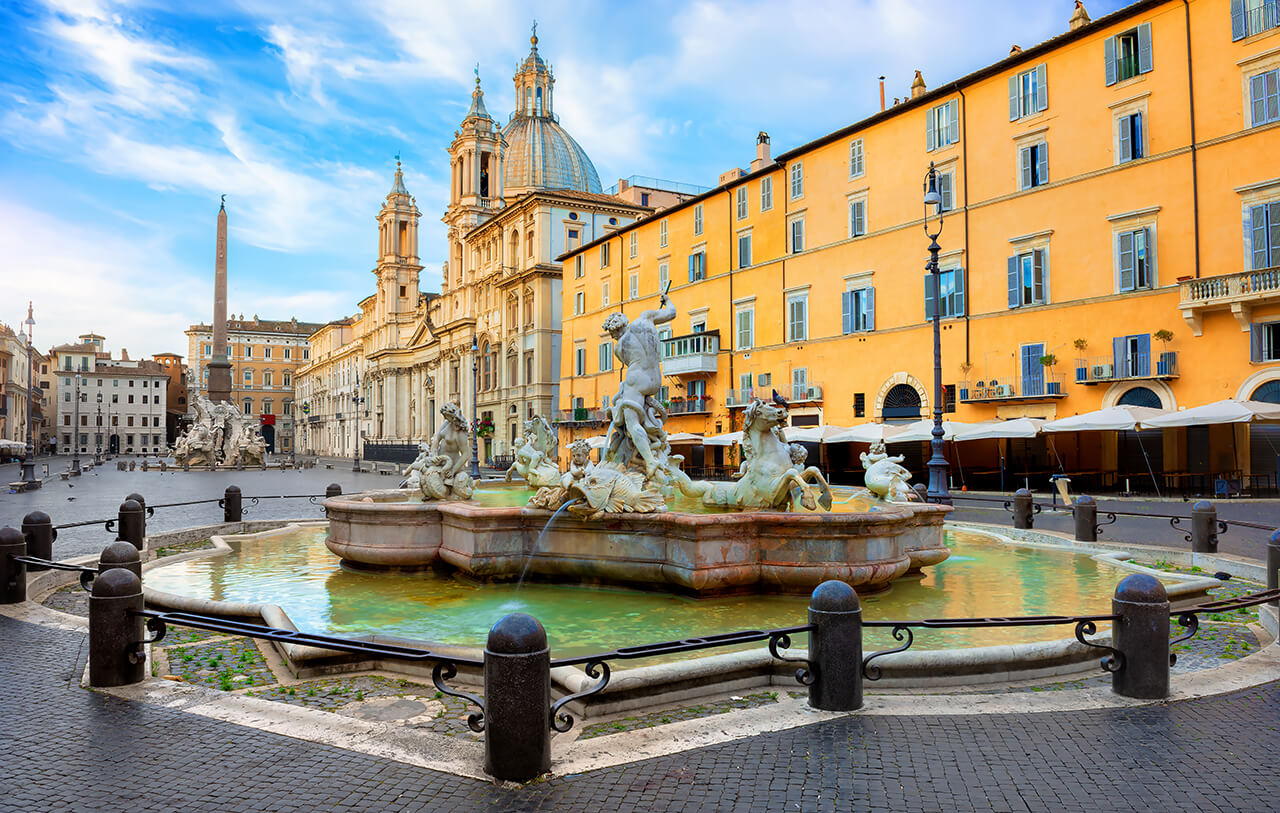
Piazza Navona unfolds atop the Stadium of Domitian — its elongated shape still echoing the ancient athletic contests held here. At its centre, Bernini's Fountain of the Four Rivers (1651) brings together the Nile, Ganges, Danube, and Río de la Plata beneath an obelisk — an allegory of the known world, commissioned by Pope Innocent X at the height of Baroque ambition.

Completed 1762
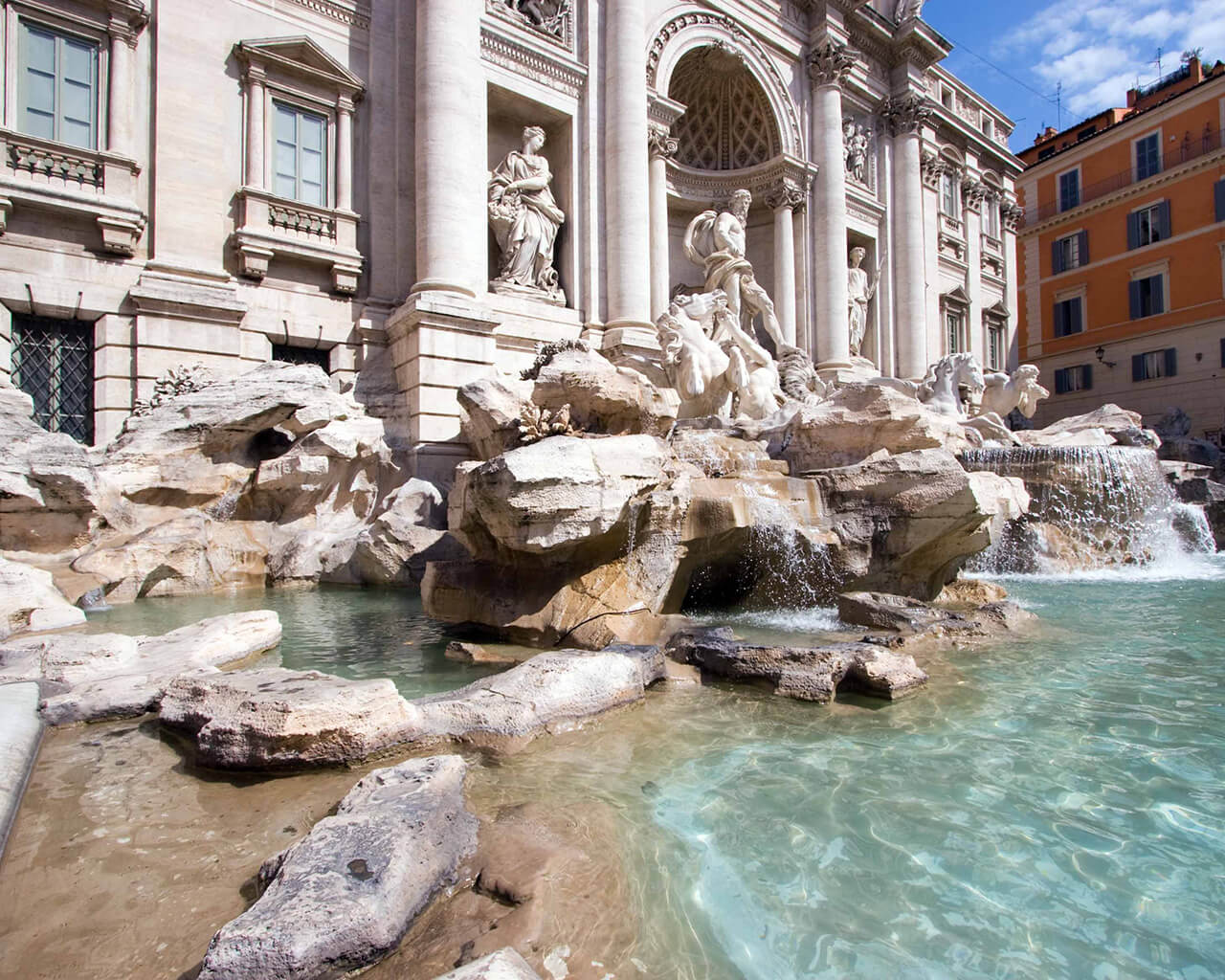
The Trevi Fountain

Completed in 1762, the Trevi marks the terminus of one of Rome's ancient aqueducts — the Acqua Vergine — which has supplied the city with water since 19 BC. The tradition of casting a coin over the shoulder is an old Roman gesture said to ensure one's return. The fountain receives on average around €3,000 per day in coins, which are collected regularly and donated to charity.

Completed 1725
The Spanish Steps

Finished in 1725, the Spanish Steps connect the Trinità dei Monti church above to the Piazza di Spagna below in a theatrical rise of 135 steps that has drawn artists, writers, and thinkers for three centuries. Keats lived and died in the house at the base. Stendhal, Goethe, and Dickens all passed through. The steps themselves are a performance — of architecture, of gathering, of the Roman afternoon.

Trevi Fountain — Rome
The Trevi Fountain
Piazza Navona — Rome
Piazza Navona
Rome panoramic — the Eternal City
The Eternal City

"Day Eight is not merely about seeing Rome. It is about understanding why Rome remains central to how the world defines history, art, power, and faith — and why, even after centuries, it continues to feel alive."

— Seven Oaks Italy

Returning to Seven Oaks in the evening, the contrast feels deliberate.

The capital's grandeur gives way to hillside calm. The sound of the city is replaced by the sound of the countryside at dusk. Dinner is refined yet understated — reflecting the elegance of Italian gastronomic culture, prepared with simplicity and care so that the quality of the ingredients speaks for itself. Rome asks something of you. Seven Oaks gives it back.

Everything You Need
to Know

👟 What to Wear
  • Comfortable, well-worn walking shoes — Rome involves many kilometres on stone, marble, and cobblestone
  • Light, breathable clothing — September in Rome can still be warm
  • Shoulders and knees must be covered to enter St. Peter's Basilica — bring a light scarf or layer if needed
  • A small bag or daypack for water, sun protection, and any items purchased during the day
  • Sunhat and sunscreen for the outdoor sections
Rome is a city for comfortable shoes. This is the most walking-intensive day of the journey — do not underestimate it.
🏛️ The Colosseum
  • Entry is included in your Seven Oaks package — no queuing for tickets on the day
  • The guided visit covers the arena floor and tier levels — approximately 60–75 minutes
  • Photography permitted throughout
  • The Roman Forum is adjacent — the combined visit provides essential context for the Colosseum's place in Roman civic life
  • The site involves stairs and uneven ancient stone — comfortable footwear is essential
St. Peter's & The Vatican
  • Covered shoulders and knees required — guards enforce this at the entrance without exception
  • Entry to St. Peter's Basilica is free — no ticket required
  • Climbing Michelangelo's dome is optional and involves 320 steps — approximately 30–45 minutes
  • St. Peter's Square is best appreciated in the morning or late afternoon light — the colonnades cast remarkable shadows
  • Vatican Museums are not included in today's itinerary — a full day is required to do them justice
🍽️ Meals & Logistics
  • Breakfast at Seven Oaks — 08:30, included
  • Lunch in Rome — approximately 13:00, included
  • Dinner at Seven Oaks on return — 19:30, included
  • Water and light refreshments available throughout the day — Rome in September still requires regular hydration
  • Transfer approximately 2 hours each way — bring reading material or simply enjoy the landscape
Tomorrow (Day 9) is intentionally slow — a free morning, the pasta cooking class at 12:30, and the farewell aperitivo at 18:30. A gentle and restorative penultimate day after the scale of Rome.
WhatsAppChat with us